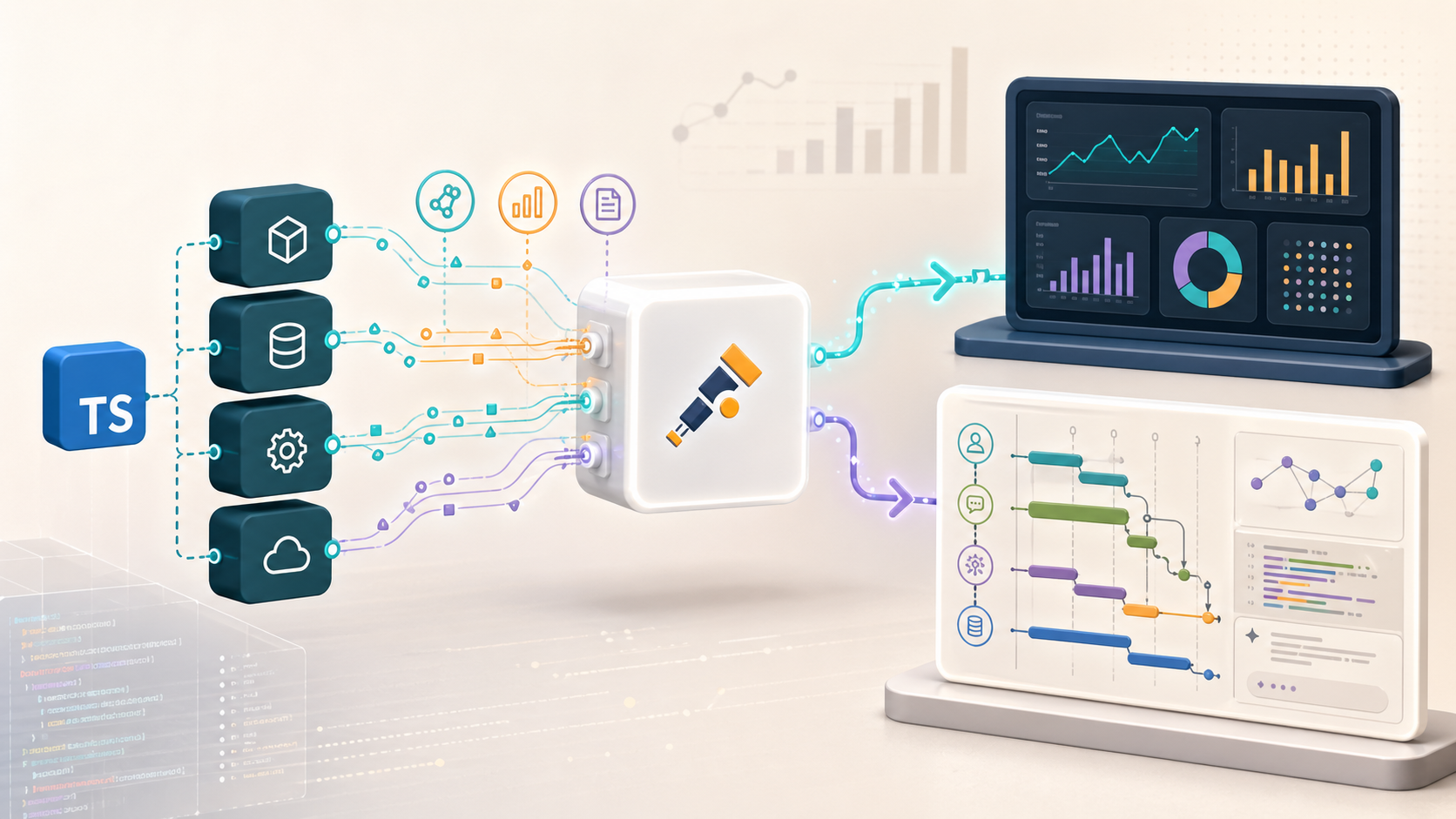
Generated illustration of a TypeScript observability pipeline flowing through OpenTelemetry into dashboards and LLM tracing

OpenTelemetry (OTel) in TypeScript: How It Works and How Langfuse Uses It

When a production system fails, the hardest part is often not the fix. The hardest part is knowing where to look. That is the real value of observability. A service without observability feels like a black box. Requests go in, responses come out, and when something breaks we start guessing. With useful telemetry, that black box becomes closer to a glass box: we can see request paths, slow dependencies, errors, queueing, retries, model latency, token usage, and the exact step where a workflow fell apart. ...

April 27, 2026 · 16 min · Nitin

Source Maps Explained: How They Work and Why They Sometimes Leak Source Code

Most developers only think about source maps when DevTools magically shows the original TypeScript instead of unreadable bundled JavaScript. That convenience hides an important fact: A source map is not just “debug metadata.” It is a translation table between generated code and original source code. And depending on how it is emitted, it can contain the original source itself. That is why source maps sit at the intersection of: debugging build tooling browser DevTools error reporting systems like Sentry security and accidental code exposure If you have ever wondered how a minified file can still produce readable stack traces, or how a published .map file can expose a package’s real TypeScript source, this is the mental model you want. ...

April 2, 2026 · 10 min · Nitin