RoPE Explained: The Positional Encoding Trick Behind Modern Language Models

When people talk about transformers, they usually focus on attention, scale, or training data. But one smaller design choice has an outsized effect on model quality: How does the model know where each token appears in the sequence? That question matters because transformers do not understand order by default. Without positional information, a sequence starts to look more like an unordered set of tokens than a structured sentence, paragraph, or program. ...

March 19, 2026 · 10 min · Nitin
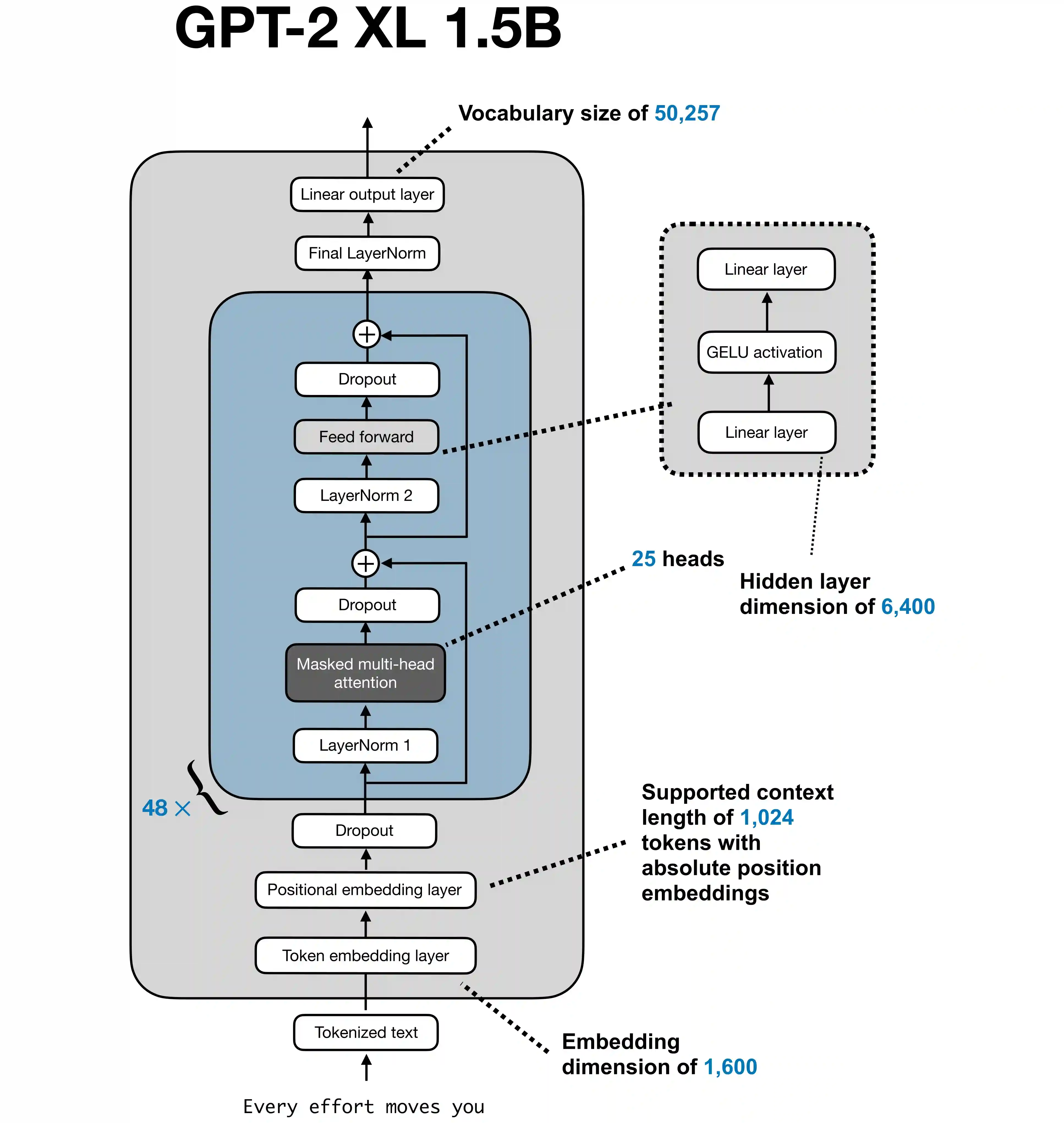
GPT-2 XL architecture diagram showing token embeddings, positional embeddings, 48 transformer blocks, 25 attention heads, and the output layer

Understanding LLM Architecture: Layers, Transformer Blocks, and Attention Heads

Large Language Models (LLMs) such as GPT-2, GPT-3, LLaMA, and BERT are built on top of the Transformer architecture. That architecture changed natural language processing by replacing recurrence with attention, which lets models process sequences more efficiently and capture long-range relationships more directly. If you are trying to understand what terms like layer, transformer block, and attention head actually mean, the easiest way is to follow the path a sentence takes through a GPT-style model. ...

March 16, 2026 · 8 min · Nitin

How Much Do LLMs Hallucinate in Document Q&A? Key Lessons from a 172B-Token Study

If you are building a RAG system, internal knowledge assistant, or document search chatbot, one question matters more than almost anything else: When the answer is supposed to come from the provided documents, how often does the model still make things up? That is exactly what the March 9, 2026 paper “How Much Do LLMs Hallucinate in Document Q&A Scenarios? A 172-Billion-Token Study Across Temperatures, Context Lengths, and Hardware Platforms” tries to measure. ...

March 13, 2026 · 9 min · Nitin