The CAP theorem is one of the most important ideas in distributed systems because it explains why “just make it always correct and always online” is not a realistic requirement once multiple nodes and unreliable networks enter the picture.
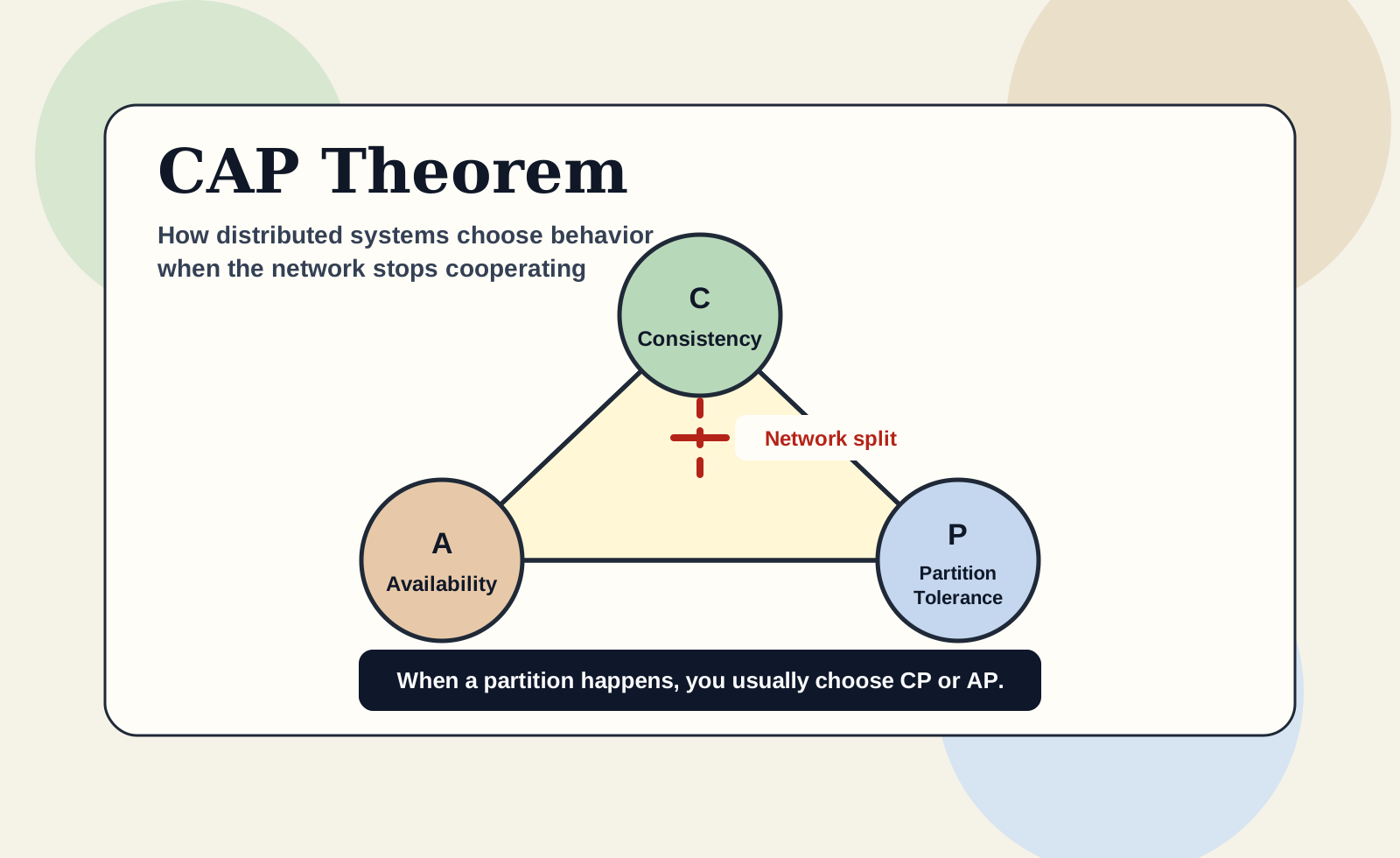
In simple terms, CAP says that when a network partition happens, a distributed system can prioritize either:
- Consistency
- Availability
But not both at the same time.
Partition tolerance is not a feature you casually add or remove. If your system runs across multiple machines, partitions are a fact of life, so the real design choice is usually CP vs AP.
What CAP Stands For
Consistency
Every client sees the same data at the same time after a write completes.
If one node accepts a write, another node should not return an older value as if that write never happened.
Availability
Every request receives a non-error response, even if that response may not contain the latest data.
Availability in CAP is stricter than “the system is usually up.” It means the system continues to answer requests without simply timing out or refusing them.
Partition Tolerance
The system continues operating even when nodes cannot communicate with one another because of dropped packets, broken links, slow networks, or a full region-level isolation event.
Why the Tradeoff Appears
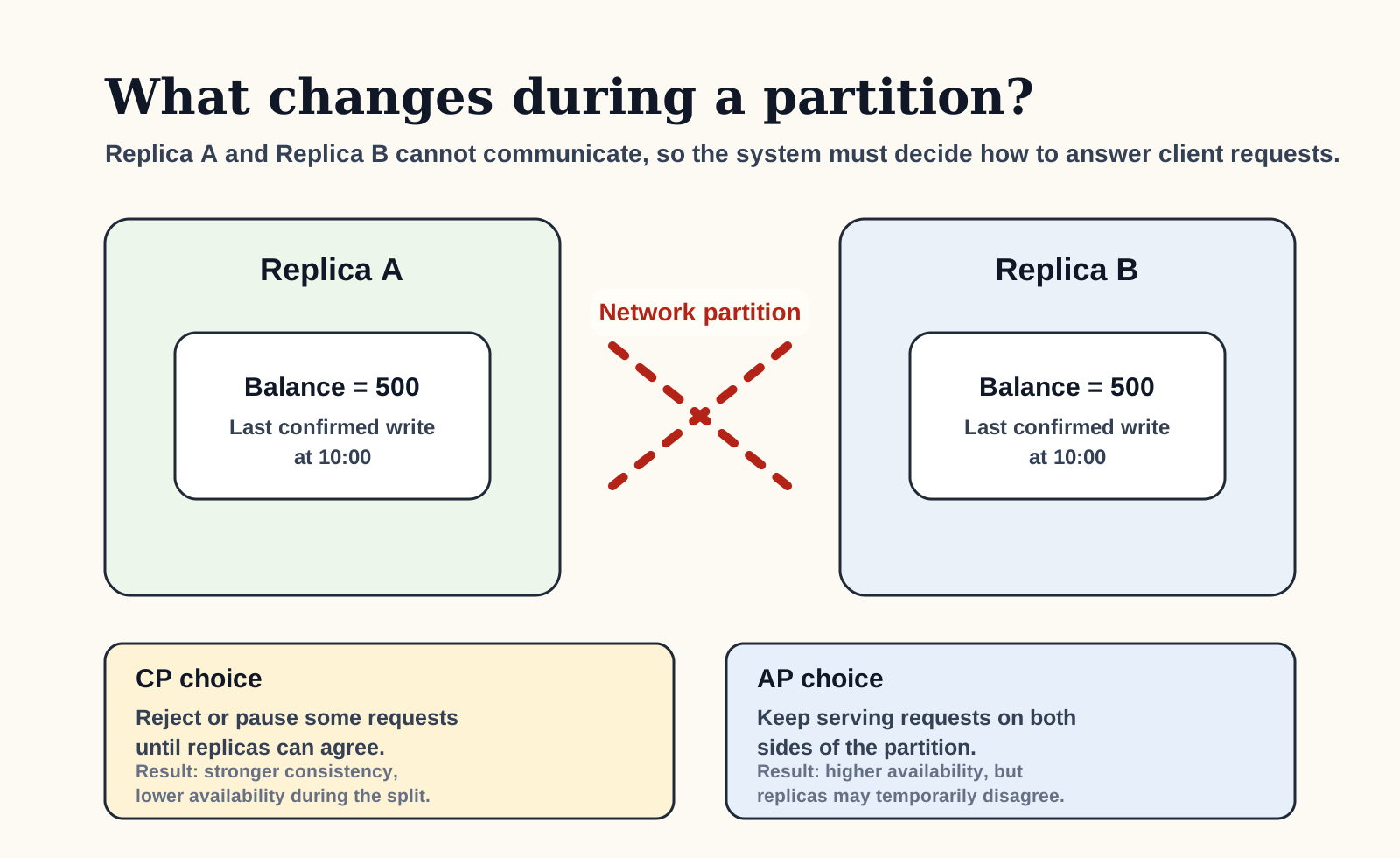
Imagine two replicas holding the same account balance. A client writes to Replica A, but Replica A cannot reach Replica B because the network is split.
At that point the system has two options:
- Wait or reject requests until replicas can coordinate again.
- Keep accepting requests on both sides and reconcile later.
The first path preserves consistency but sacrifices availability. The second path preserves availability but risks inconsistent reads or conflicting writes.
A Partition Scenario
This is the moment where the theorem becomes practical instead of theoretical:
If you are building a banking ledger, rejecting a write is often better than accepting contradictory balances.
If you are building a social feed, serving slightly stale data is usually better than showing an error page to everyone.
That is the heart of CAP: the right answer depends on the product requirement.
Understanding CP Systems
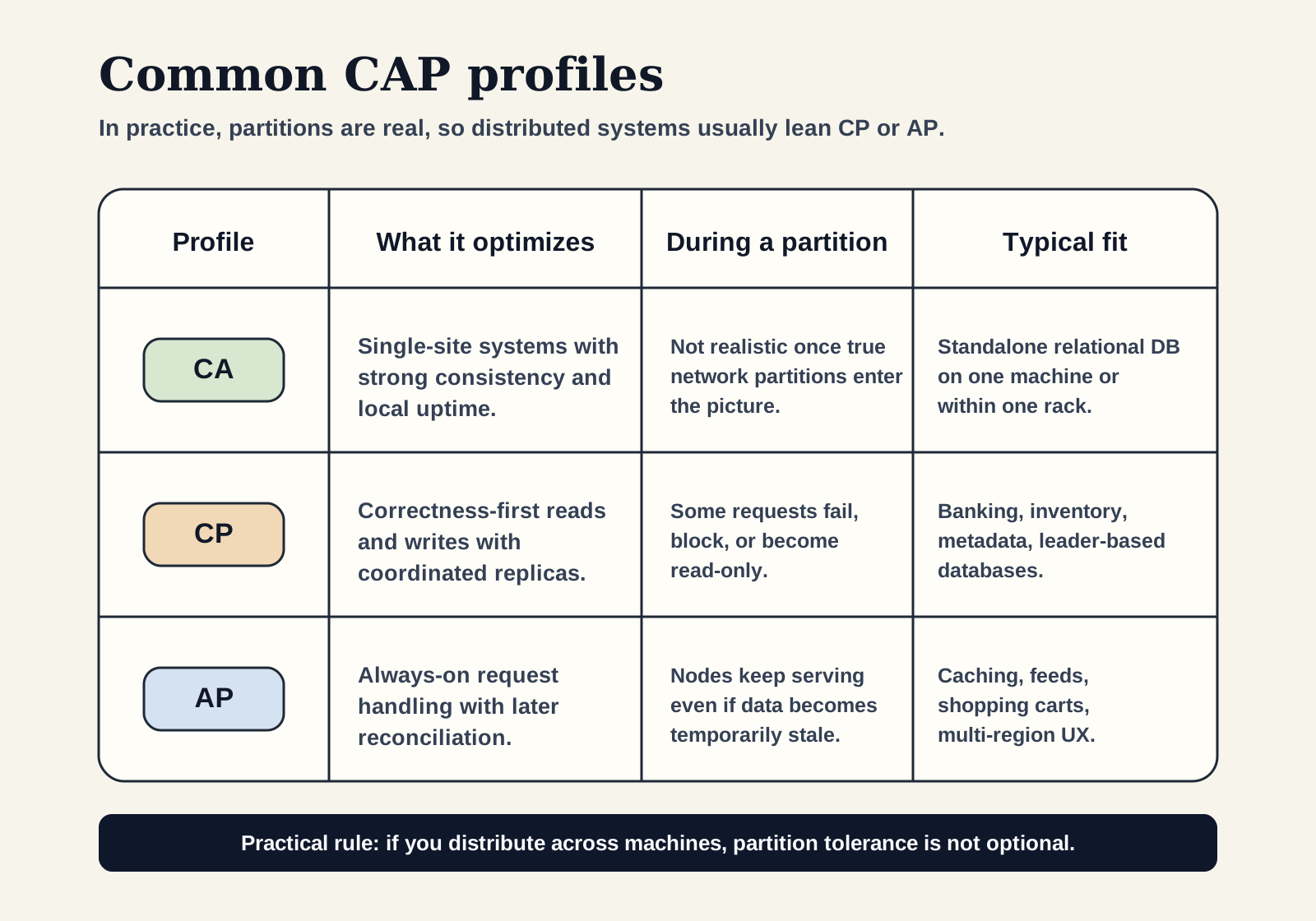
A CP system chooses consistency and partition tolerance.
During a partition, it may:
- Reject writes
- Return errors for some requests
- Become read-only
- Wait for a leader or quorum before responding
This is a good fit when correctness matters more than immediate responsiveness.
Common examples:
- Payment and ledger systems
- Inventory management
- Metadata stores
- Systems using leader election and quorum writes
The tradeoff is user-visible unavailability during failures.
Understanding AP Systems
A AP system chooses availability and partition tolerance.
During a partition, it may:
- Keep serving reads and writes from both sides
- Accept that replicas may diverge temporarily
- Resolve conflicts later
- Use eventual consistency instead of immediate consistency
This is a good fit when the business values continuous service more than perfectly synchronized state at every instant.
Common examples:
- Social timelines
- DNS-style systems
- Product catalog browsing
- Shopping carts and recommendation systems
The tradeoff is stale reads or reconciliation complexity.
What About CA Systems?
People often talk about CA systems, but in practice that label mostly applies to systems that do not have to survive real network partitions across multiple nodes.
For example, a single-node relational database can often behave like CA from the application’s point of view:
- Strong consistency on one machine
- High availability as long as that machine stays healthy
But once you distribute the system, partition tolerance stops being optional.
CAP Profiles at a Glance
CAP Is Not the Whole Story
CAP is useful, but it is also easy to oversimplify.
A few important clarifications:
- CAP only becomes interesting during a partition.
- Many systems behave like they are strongly consistent most of the time and only expose tradeoffs during failures.
- Real architectures use more knobs than CAP alone: quorum sizes, leader election, retries, idempotency, conflict resolution, replication lag, and client-side UX fallbacks.
That is why experienced engineers treat CAP as a starting point for reasoning, not the final word on distributed system design.
Practical Design Questions to Ask
When choosing between CP and AP behavior, ask:
- What is worse for the user: an error now or stale/conflicting data now?
- Can the business safely reconcile data later?
- Which operations require strict correctness, and which can tolerate eventual consistency?
- Do all endpoints need the same guarantees, or can some be CP while others are AP?
In many real systems, the answer is mixed:
- Payment authorization might be CP.
- Activity feeds might be AP.
- Search indexes might lag behind the source of truth.
Final Takeaway
The CAP theorem does not say you can pick any two properties all the time.
The practical reading is:
In a distributed system, when a partition happens, you usually have to choose between consistency and availability.
That single sentence explains many design decisions in modern databases, queues, caches, and replicated services.
If you understand CAP clearly, you make better choices about failure handling instead of assuming the network will always behave.